
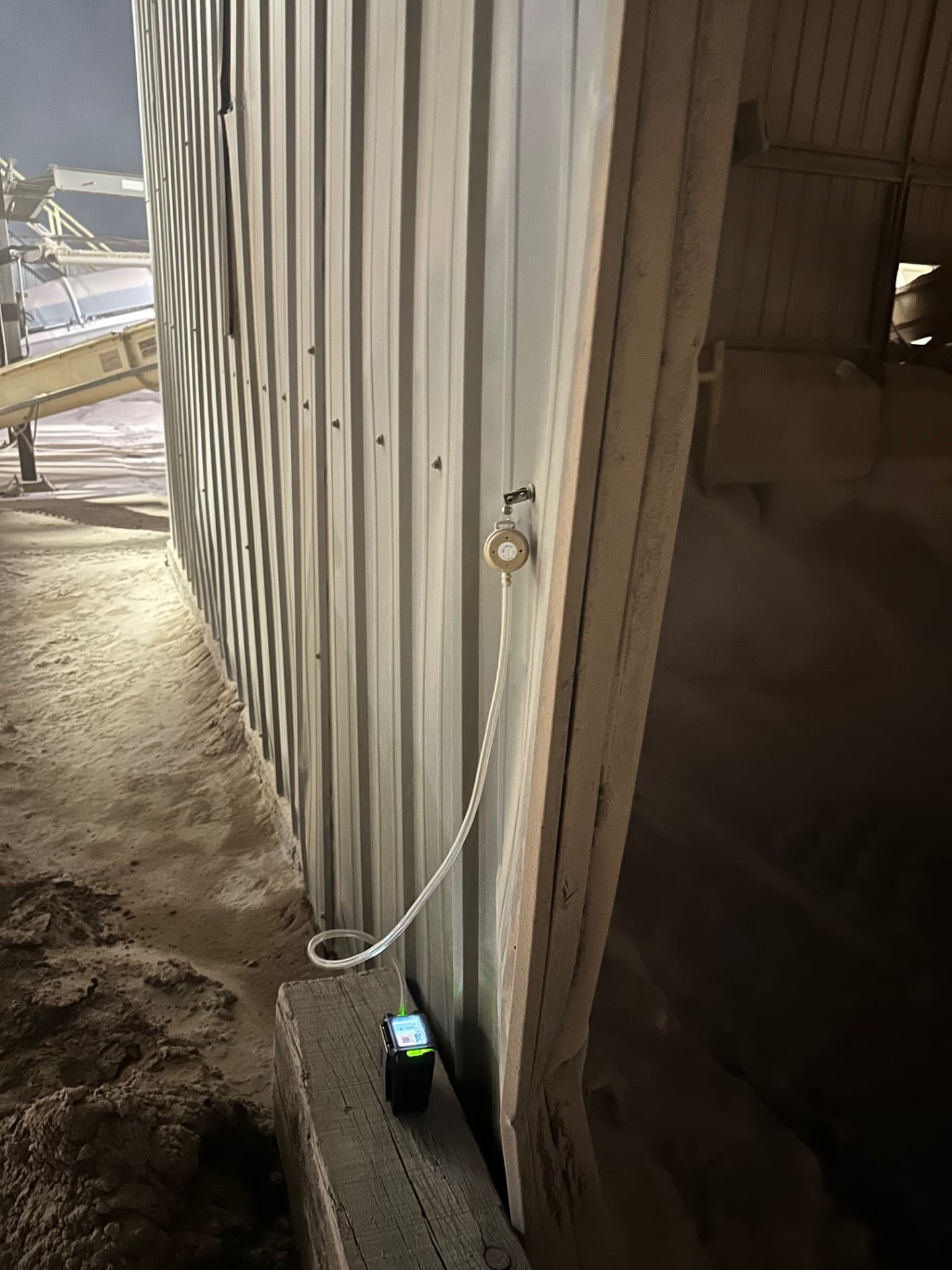
Respirable crystalline silica remains one of the most serious, and most frequently cited, exposures on construction sites. Cutting, drilling, grinding, and demolition can create airborne dust levels that exceed OSHA limits in minutes. The outcomes your EHS program is hired to deliver are simple: fewer exposures, fewer citations, and documentation that stands up in an audit.
"Most gaps aren't technical, they're documentation gaps. The work is happening, but the proof isn't centralized.", Provisio EHS Industrial Hygiene Team
OSHA silica requirements (2026 readiness checklist)
OSHA's construction silica standard (29 CFR 1926.1153) remains the baseline for 2026. Use this section as a readiness check and verify any state-plan or interpretation updates that apply to your region.
Core requirements to validate:
- PEL and Action Level: 50 μg/m³ PEL and 25 μg/m³ action level (8‑hr TWA).
- Exposure assessment: Use performance option (objective data) or scheduled monitoring to confirm exposure levels.
- Written Exposure Control Plan: Job‑specific plan covering tasks, controls, housekeeping, and responsibilities.
- Engineering/Work Practice Controls: Water delivery, local exhaust, and process isolation before PPE.
- Respiratory protection program: Required when controls can't achieve PEL.
- Housekeeping: No dry sweeping or compressed air without controls.
- Medical surveillance: For employees exposed at or above the action level for 30+ days/year.
- Training + communication: Hazard communication, controls, and proper use of respirators.
- Recordkeeping: Sampling, objective data, medical surveillance records, and plan updates.
"Compliance doesn't stop at sampling. The standard expects control verification and a living plan.", IH Lead, Provisio EHS
Exposure assessment: performance vs. monitoring
Construction teams typically use one of two paths:
Performance option (objective data)
- Use third‑party data, prior sampling, or published data for similar materials, tasks, and controls.
- Requires rigorous documentation and task comparability.
Scheduled monitoring
- Initial monitoring for tasks with potential exposure.
- Follow‑up monitoring cadence based on results.
Pro tip: If you rotate crews or subcontractors, ensure your documentation clearly ties the data to the task, tool, and control setup.
Hierarchy of controls: what auditors want to see
Auditors look for a clear hierarchy and evidence it's enforced.
- Engineering controls (e.g., water‑fed saws, shrouds, HEPA vacs)
- Work practice controls (task scheduling, isolation, access control)
- Respiratory protection (fit testing, medical clearance, documented assignments)
Medical surveillance + training: the usual weak spots
Medical surveillance and training are frequently delayed or distributed across vendors.
What to document:
- Medical surveillance eligibility list (30+ days at or above action level)
- Exam scheduling and completion status
- Physician/PLHCP opinions and required follow‑ups
- Training rosters tied to the specific silica tasks performed
How Provisio EHS supports silica compliance
Provisio EHS is built for audit‑ready EHS operations, not just point solutions. Teams use it to align monitoring, controls, and documentation in one system.
- Exposure monitoring workflows with required‑field prompts and approvals
- Role‑based permissions so only qualified staff can sign off on exposure assessments
- Automated reminders for re‑monitoring, medical surveillance, and training renewals
- Centralized documentation for sampling results, control plans, and inspector‑ready records
Learn more: Provisio EHS Software • EHS Consulting • Pricing
2026 silica compliance checklist (construction)
Use this checklist as a pre‑job and mid‑project audit tool.
Pre‑job planning
- Identify silica‑generating tasks and tools
- Confirm control plan exists and is job‑specific
- Validate objective data or schedule initial monitoring
- Verify subcontractor controls and documentation standards
During work
- Enforce engineering controls and dust suppression
- Verify respirator usage and fit testing where required
- Maintain access control and housekeeping procedures
Post‑job / ongoing
- Log sampling results and corrective actions
- Track medical surveillance completion and follow‑ups
- Review plan effectiveness and update for new tasks
Regulatory references
- OSHA Respirable Crystalline Silica – Construction: 29 CFR 1926.1153
- OSHA Respirable Crystalline Silica – General Industry: 29 CFR 1910.1053 (if applicable to your crews)
- NIOSH hazard reviews and task‑based exposure guidance (reference in resources section)
For deeper sampling strategy guidance, see our related article on air sampling for silica exposure. For how GCs typically buy field help, see construction safety consulting.
Ready to tighten silica compliance?
Construction leaders who centralize monitoring, controls, and records respond faster when exposure questions arise, and prove compliance without scrambling for paperwork.
Take the next step:
- Schedule construction safety consulting or an Industrial Hygiene consultation with Provisio EHS
- Book a software demo to centralize sampling, controls, and records
- Review pricing for software and consulting options
- See how a mine achieved MSHA silica compliance with targeted IH sampling: MSHA Silica Compliance Case Study
Ready to Improve Your Safety Management?
Explore Provisio EHS solutions to streamline compliance and protect your workforce.
Schedule Your OSHA Audit
Let our industrial hygiene professionals identify your compliance gaps before regulators do.
Try Provisio EHS Free
Get 30 days of full access to our safety management platform. No credit card required.
Start Your Free TrialSee How It Works Together
Explore our Audit + Software Implementation Bundle. Get compliant and automate faster.
Get Bundle Pricing