
The Deadly Reality of Confined Spaces
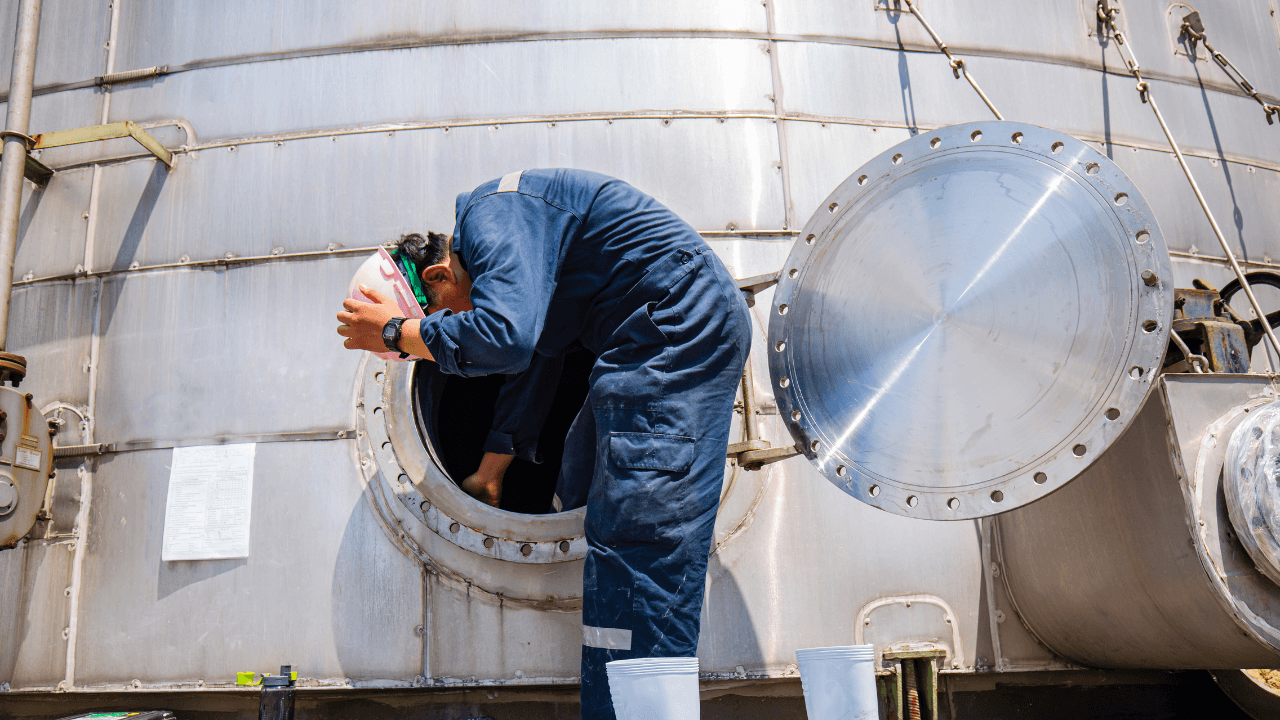
Three workers enter a storage tank to clean it. The tank has been out of service for weeks, so they assume the atmosphere is safe. They don't test the air before entering. Within minutes, all three are unconscious from oxygen deficiency. By the time rescue arrives, it's too late.
This scenario plays out dozens of times each year, making confined space entry one of the most dangerous activities in industrial settings. According to OSHA, confined space incidents result in approximately 100 fatalities annually in the United States. Many of these deaths involve multiple victims, workers who enter to rescue others without proper training or equipment.
The harsh reality: Most confined space fatalities are preventable with proper identification, assessment, and entry procedures. But many organizations don't realize they have confined spaces, or they underestimate the hazards.
What Is a Confined Space?
OSHA defines a confined space as a space that is large enough for an employee to enter and perform work, has limited or restricted means of entry or exit, and is not designed for continuous employee occupancy.
Common examples include storage tanks, silos, grain bins, vessels, reactors, pits, sumps, manholes, underground vaults, boilers, furnaces, tunnels, pipelines, ventilation ducts, ship compartments, and excavations deeper than 4 feet. Office cubicles, storage rooms, elevators, and standard work areas are not confined spaces because they're designed for continuous occupancy.
Permit-Required vs. Non-Permit Confined Spaces
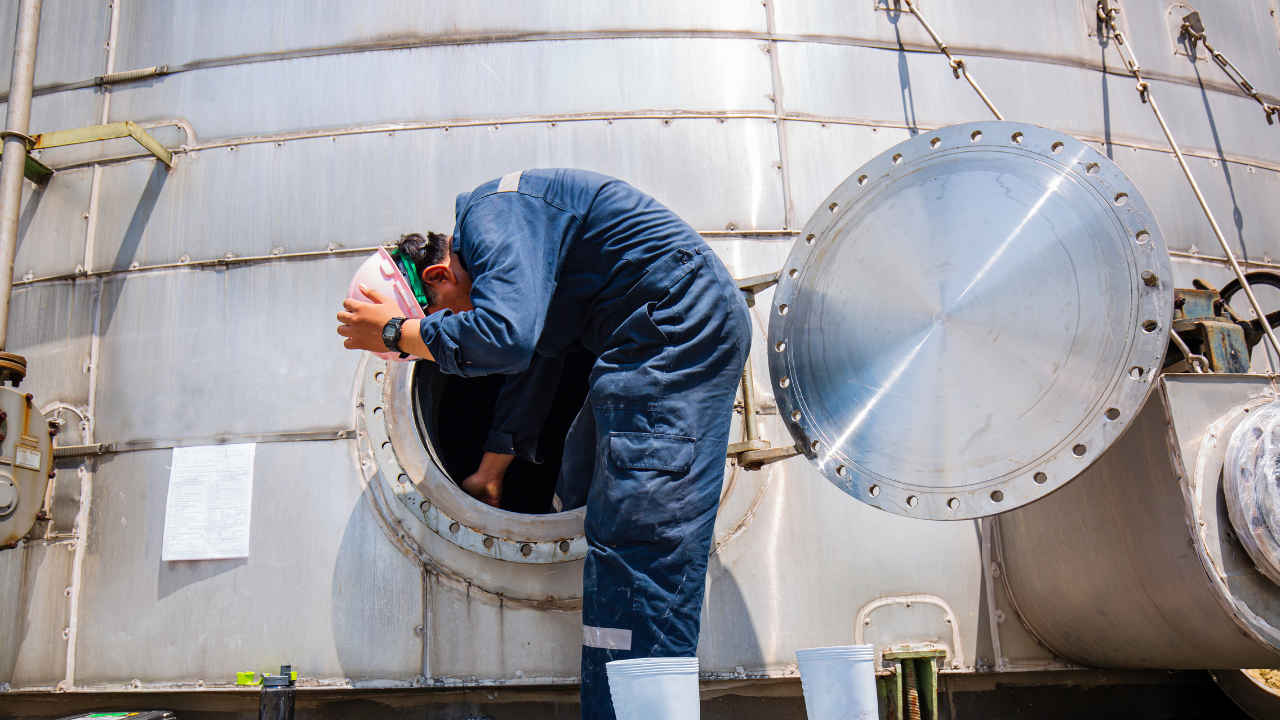
OSHA Standard 1910.146 distinguishes between two types of confined spaces:
Non-Permit Confined Space
A confined space that does not contain, and with respect to atmospheric hazards would not have the potential to contain, any hazard capable of causing death or serious physical harm. This means no atmospheric hazards, no engulfment hazards, no configuration hazards, and no other serious safety or health hazards.
Requirements are minimal: just ensure the space remains safe and document why it's non-permit.
Permit-Required Confined Space (PRCS)
A confined space that contains or has the potential to contain atmospheric hazards (oxygen concentration below 19.5% or above 23.5%, flammable gases above 10% of LEL, toxic substances above PEL), engulfment hazards (grain, sand, liquids, flowing solids), configuration hazards (converging walls, sloping floors), or other serious safety or health hazards (mechanical, electrical, temperature extremes, biological).
Requirements include a comprehensive program with permits, training, equipment, and rescue procedures.
Elements of a Compliant Confined Space Program
If you have permit-required confined spaces, OSHA requires a written program that includes:
1. Confined Space Inventory and Classification
You need a complete inventory of all confined spaces in your facility, classification of each space as permit-required or non-permit, documentation of the assessment process, and re-evaluation when spaces or conditions change. Common mistake: assuming spaces are non-permit without proper assessment.
2. Permit System
You need a written permit for each entry into a permit-required confined space, completed before entry begins. The permit must specify the space to be entered, purpose of entry, date and authorized duration, authorized entrants, attendants, and entry supervisor, hazards present, isolation measures, acceptable entry conditions, atmospheric testing results, rescue services, communication procedures, and required equipment. Common mistake: using generic permits that don't address space-specific hazards.
3. Atmospheric Testing
You need to test atmosphere before entry for oxygen, flammable gases and vapors, and toxic substances. Test in this order: oxygen first, then flammables, then toxics. Continuously monitor during entry for spaces with potential atmospheric hazards. Use calibrated, properly maintained testing equipment and trained personnel. Common mistake: testing only once at the beginning, not continuously monitoring.
4. Isolation and Control Measures
You need procedures to isolate the space from hazards including lockout/tagout of energy sources, blanking or blinding of pipelines, double block and bleed for process lines, and disconnection of mechanical linkages. Use ventilation to control atmospheric hazards, purging with inert gas when appropriate, and removal of engulfment materials. Common mistake: incomplete isolation, leaving some energy sources or process connections active.
5. Entry Team Roles and Responsibilities
Authorized entrants must know the hazards, signs and symptoms of exposure, how to use required PPE and equipment, and how to communicate with the attendant. They alert the attendant to dangerous conditions and exit when ordered.
Attendants know the hazards including behavioral effects, maintain count and identity of entrants, remain outside the space during entry, communicate with entrants, monitor activities, summon rescue if needed, perform non-entry rescue if trained, and prevent unauthorized entry.
Entry supervisors know the hazards, verify acceptable entry conditions exist, terminate entry when necessary, verify rescue services are available, and ensure entry operations remain consistent with permit. Common mistake: unclear roles, or personnel performing multiple roles simultaneously.
6. Training Requirements
You need initial training before employees are assigned confined space duties, and refresher training when duties change, hazards change, procedures change, there are deviations from procedures, or inadequacies in employee knowledge are identified. Training must provide understanding of confined space hazards, duties of each role, use of equipment, and emergency procedures. Document all training with employee signatures. Common mistake: generic training that doesn't address facility-specific confined spaces and procedures.
7. Rescue and Emergency Services
You need procedures for summoning rescue and emergency services. Rescue services must be available before entry begins, capable of responding in a timely manner, and equipped and trained for the specific hazards. Non-entry rescue is preferred using retrieval systems, tripods, and winches. Entry rescue is only used if non-entry is not feasible. Rescue team must practice at least annually. Common mistake: assuming local fire department can perform confined space rescue without verifying capability.
8. Equipment and PPE
You need atmospheric monitoring equipment that is calibrated and maintained, ventilation equipment if needed to control atmospheric hazards, PPE appropriate for identified hazards, rescue equipment including retrieval systems, tripods, winches, and harnesses, communication equipment such as two-way radios and signaling devices, adequate lighting for safe entry and work, and barriers and warning signs to prevent unauthorized entry. Common mistake: inadequate or missing rescue equipment, assuming it won't be needed.
9. Program Review and Update
Review the program when entry operations reveal inadequacies, confined spaces change, hazards change, or new equipment or procedures are introduced. Update procedures and permits as needed and document all reviews and changes. Common mistake: developing a program once and never reviewing or updating it.
Common Confined Space Program Mistakes
Not identifying all confined spaces because organizations don't conduct systematic surveys. Solution: conduct comprehensive facility surveys, document all spaces that meet the definition, assess each space for permit-required characteristics, and create an inventory with classifications.
Assuming spaces are non-permit without assessment. Conditions change, and a space that was safe yesterday may have atmospheric hazards today. Solution: test atmosphere before classifying as non-permit, document the assessment, and when in doubt, treat as permit-required.
Using generic permits that don't address specific hazards. Each permit-required confined space has different hazards requiring different controls. Solution: develop space-specific permits listing actual hazards, specifying exact isolation measures, and detailing required equipment and PPE.
Incomplete atmospheric testing. Atmospheric conditions can change during entry. Solution: test before entry for oxygen, flammables, and toxics, continuously monitor during entry, test in correct order, and use calibrated equipment.
Inadequate isolation leaving some energy sources or process connections active. Solution: lockout and tagout all energy sources, blank or blind all pipelines, disconnect mechanical linkages, and verify isolation before entry.
Unclear roles and responsibilities. Solution: train each role separately on specific duties, ensure personnel understand they cannot perform multiple roles simultaneously, and provide job aids for each role.
Assuming local fire department can rescue without verifying capability. Many fire departments are not trained or equipped for confined space rescue. Solution: verify rescue capability, confirm response time is acceptable, and arrange for private rescue service or develop internal rescue team if needed.
No program review or update. Solution: review program annually or when conditions change, update procedures based on lessons learned, and document all reviews and updates.
Best Practices for Confined Space Programs
Conduct comprehensive facility surveys to identify all confined spaces. Develop space-specific procedures and permits for each permit-required space. Train all personnel thoroughly with initial training, hands-on demonstrations, and competency evaluation. Test atmosphere properly before every entry and continuously monitor during entry. Isolate completely from all energy sources and process connections. Maintain rescue capability by verifying rescue service capability and practicing procedures annually. Review and update programs regularly when conditions change.
Provisio EHS Confined Space Consulting Services
Developing a compliant confined space program requires expertise in confined space identification and classification, hazard assessment and control, procedure development, training program design, equipment selection, and rescue planning.
Our certified industrial hygienists and safety professionals have 20+ years of experience developing confined space programs for manufacturers, construction firms, and industrial operations. We develop space classification through comprehensive facility surveys, space-specific entry procedures and permit templates, training programs for all roles, and equipment guidance for atmospheric monitoring, ventilation, PPE, and rescue equipment.
Request confined space program development services
Conclusion: Protect Workers from Confined Space Hazards
Confined space entry is inherently dangerous, but fatalities are preventable with proper identification, assessment, and procedures. A compliant confined space program is not optional, it's required by OSHA and essential for protecting workers.
Key Takeaways
Conduct comprehensive facility surveys to identify all confined spaces. Properly classify spaces as permit-required or non-permit based on actual hazards. Develop space-specific procedures and permits, not generic templates. Test atmosphere properly before entry and continuously during entry. Isolate spaces completely from all energy sources. Train all personnel thoroughly and verify rescue capability before entry. Review and update programs regularly.
Don't wait for an incident to expose your confined space program gaps. Develop a compliant program today that protects workers and satisfies OSHA requirements.
Next Steps
- Request confined space program development services
- Download our confined space assessment checklist
- Talk to a safety expert
About Provisio EHS: We provide comprehensive safety consulting services for manufacturers, construction firms, and industrial operations. Our certified industrial hygienists and safety professionals develop compliant confined space programs that protect workers and satisfy OSHA requirements.
Ready to Improve Your Safety Management?
Explore Provisio EHS solutions to streamline compliance and protect your workforce.
Schedule Your OSHA Audit
Let our industrial hygiene professionals identify your compliance gaps before regulators do.
Try Provisio EHS Free
Get 30 days of full access to our safety management platform. No credit card required.
Start Your Free TrialSee How It Works Together
Explore our Audit + Software Implementation Bundle. Get compliant and automate faster.
Get Bundle Pricing