
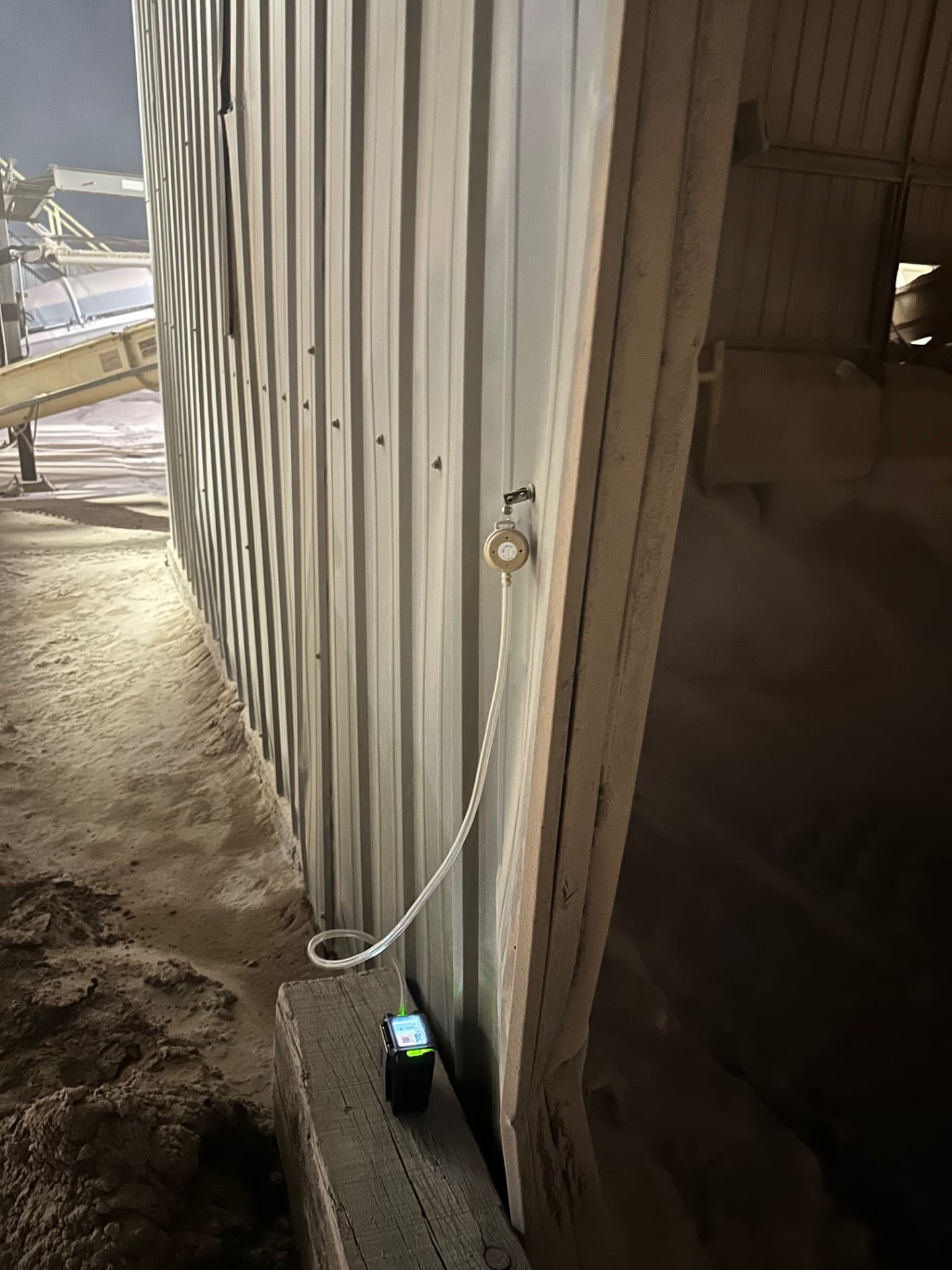
Why Silica Air Sampling Matters
Crystalline silica exposure is one of the most serious occupational health hazards in construction and manufacturing. Inhaling respirable crystalline silica particles can cause silicosis, an incurable and potentially fatal lung disease, as well as lung cancer, chronic obstructive pulmonary disease (COPD), and kidney disease.
OSHA's Silica Standard (29 CFR 1926.1153 for construction, 1910.1053 for general industry) requires employers to assess silica exposure and implement controls when employees may be exposed above the Action Level (25 µg/m³) or Permissible Exposure Limit (50 µg/m³).
The challenge: Silica exposure varies dramatically based on tasks, materials, environmental conditions, and control measures. Effective air sampling requires strategic planning to capture representative exposures.
When Air Sampling Is Required
OSHA Triggers for Silica Sampling
Initial exposure assessment is required when:
- Employees perform tasks that could generate respirable crystalline silica
- Tasks are not covered by OSHA's Table 1 specified exposure control methods
- You want to verify that Table 1 controls are working effectively
Periodic monitoring is required when:
- Initial sampling shows exposures at or above the Action Level (25 µg/m³)
- Monitoring must be repeated at least every six months if above the Action Level
- Monitoring must be repeated annually if between the Action Level and PEL
Reassessment is required when:
- Changes in production, process, equipment, or controls could affect exposure
- New materials or work methods are introduced
- Employee reports indicate potential exposure issues
High-Risk Tasks Requiring Sampling
Common construction and manufacturing tasks with silica exposure risk:
Construction:
- Concrete cutting, sawing, grinding, or drilling
- Jackhammering or chipping concrete
- Abrasive blasting (sandblasting)
- Masonry cutting or grinding
- Tuckpointing and mortar removal
- Rock or stone cutting and finishing
Manufacturing:
- Foundry work (molding, shakeout, casting)
- Stone countertop fabrication
- Ceramic or pottery manufacturing
- Glass manufacturing
- Hydraulic fracturing (fracking) sand handling
Types of Silica Air Sampling
1. Personal Air Sampling
What it is: A sampling pump worn by the employee with a collection device (cyclone and filter cassette) attached near their breathing zone.
Purpose: Measures the employee's actual exposure to respirable crystalline silica throughout their work shift.
When to use:
- Required for compliance with OSHA silica standard
- When you need to determine individual employee exposures
- To verify effectiveness of engineering controls
Sampling duration: Minimum 7 hours to meet OSHA requirements for full-shift Time-Weighted Average (TWA)
Equipment:
- Calibrated personal sampling pump
- 10 mm nylon cyclone separator (separates respirable fraction)
- 37 mm PVC filter cassette
- Pump calibration devices (primary and secondary flow calibration)
Key considerations:
- Pump must be calibrated before and after sampling
- Flow rate: 2.5 liters per minute (L/min)
- Cyclone must be vertical (pointing down) throughout sampling
- Sample at least two employees performing the same task
2. Area Air Sampling
What it is: Fixed sampling equipment placed in work areas to measure general air quality or identify emission sources.
Purpose: Identifies high-exposure areas, verifies ventilation effectiveness, or screens multiple work zones before conducting personal sampling.
When to use:
- Screening assessment before personal sampling
- Evaluating local exhaust ventilation (LEV) capture efficiency
- Identifying contamination sources
- Demonstrating effectiveness of engineering controls
Limitations:
- Cannot be used for OSHA compliance (personal sampling required)
- Does not account for employee movement or work practices
- May underestimate actual worker exposures
Best practices:
- Place samplers at typical employee breathing zone height (4-6 feet)
- Sample near emission sources and in general work areas
- Use results to target personal sampling efforts
3. Task-Based Sampling
What it is: Personal sampling during specific tasks (not full shift) to determine exposure during high-risk activities.
Purpose: Identifies which tasks contribute most to silica exposure, allowing targeted control measures.
When to use:
- Employees perform multiple tasks with varying exposure levels
- Want to prioritize control efforts on highest-exposure tasks
- Determining if specific tasks can be performed without respiratory protection
Methodology:
- Sample specific tasks separately (cutting, grinding, cleanup, etc.)
- Document task duration and activities
- Calculate task-specific TWA exposures
- Combine task exposures to estimate full-shift exposure
Example calculation:
Task 1: Concrete cutting (2 hours) = 180 µg/m³
Task 2: General labor (6 hours) = 15 µg/m³

Full-shift TWA = [(180 × 2) + (15 × 6)] / 8 = 56.25 µg/m³
Result: Above PEL (50 µg/m³) → Controls needed
Developing an Effective Sampling Strategy
Step 1: Identify Similar Exposure Groups (SEGs)
Group employees based on similar:
- Job tasks and activities
- Work locations
- Materials handled
- Equipment used
- Exposure duration and frequency
Example SEGs:
- "Concrete cutters using handheld saws"
- "Foundry workers on shakeout line"
- "Stone countertop fabricators using wet saws"
Step 2: Prioritize Sampling Based on Risk
Focus initial sampling on:
- Tasks with visible dust generation
- Employees reporting respiratory symptoms
- Operations with inadequate ventilation
- Tasks not covered by Table 1 controls
Step 3: Determine Sample Size
OSHA minimum: At least one sample per SEG, but best practices recommend:
- 2-4 samples per SEG for initial assessment
- Sample on worst-case days (high production, equipment malfunctions)
- Multiple shifts if exposure could vary
Statistical consideration: More samples = better confidence that results represent true exposure
Step 4: Select Sampling Locations and Timing
Personal sampling placement:
- Cyclone attached to collar or shoulder (breathing zone)
- Pump worn on belt or waist
- Tubing should not interfere with work
Timing considerations:
- Sample during normal production (not shutdown or slow periods)
- Include all tasks performed during shift
- Account for seasonal variations (outdoor construction)
Environmental factors to document:
- Temperature and humidity
- Wind speed and direction (outdoor work)
- Ventilation status (LEV on/off, fans running)
- Production levels
Step 5: Sample Collection and Handling
Critical procedures:
- Pre-calibrate pump with cyclone and filter in-line
- Record start time, flow rate, and environmental conditions
- Monitor pump during sampling (check every 1-2 hours)
- Record end time and flow rate
- Post-calibrate pump (within 5% of pre-calibration)
- Seal samples with tamper-evident tape
- Submit to AIHA-accredited laboratory with chain of custody
Common mistakes to avoid: ❌ Sampling less than 7 hours (insufficient for OSHA compliance) ❌ Not calibrating pump before and after sampling ❌ Cyclone not oriented vertically ❌ Pump flow rate outside acceptable range (2.3-2.7 L/min) ❌ Not documenting environmental conditions
Interpreting Silica Sampling Results
Understanding the Numbers
Results are reported as:
- Micrograms per cubic meter (µg/m³): Mass of respirable crystalline silica per volume of air
- 8-hour Time-Weighted Average (TWA): Average exposure over full shift
OSHA limits:
- Action Level (AL): 25 µg/m³ (triggers medical surveillance, training, periodic monitoring)
- Permissible Exposure Limit (PEL): 50 µg/m³ (maximum allowable exposure)
Exposure Scenarios and Required Actions
| Result | Classification | Required Actions |
|---|---|---|
| < 25 µg/m³ | Below Action Level | No additional requirements; reassess if changes occur |
| 25-50 µg/m³ | Above AL, below PEL | Medical surveillance, training, periodic monitoring (every 6 months) |
| > 50 µg/m³ | Above PEL | Engineering controls, respiratory protection, medical surveillance, training, periodic monitoring |
When Results Are Above the PEL
Immediate actions:
- Notify affected employees within 15 working days
- Implement interim controls (respiratory protection)
- Develop engineering control plan
- Reassess exposure after controls implemented
Hierarchy of controls (in order of effectiveness):
- Eliminate silica (substitute non-silica materials)
- Engineering controls (water suppression, ventilation, enclosure)
- Administrative controls (limit exposure duration, work practices)
- Respiratory protection (only when other controls are insufficient)
Control Verification Sampling
After implementing engineering controls, conduct follow-up sampling to verify effectiveness:
When to resample:
- After installing new ventilation systems
- After implementing water suppression
- After changing work methods or materials
- To confirm employees can work without respirators
Comparison approach:
Pre-control exposure: 120 µg/m³
Post-control exposure: 35 µg/m³
Reduction: 71% → Still above AL, additional controls needed
Success criteria:
- Exposures reduced below Action Level (25 µg/m³) → Minimal ongoing requirements
- Exposures reduced below PEL (50 µg/m³) → Respiratory protection may not be required
Common Silica Sampling Challenges
1. Short-Duration Tasks
Challenge: Employee performs silica-generating task for only 30 minutes per day.
Solution: Task-based sampling during the activity, then extrapolate to full-shift TWA.
2. Intermittent Tasks
Challenge: Cutting concrete for 15 minutes every 2 hours.
Solution: Full-shift personal sampling capturing all tasks, or multiple task samples combined with time-weighting.
3. Outdoor Construction with Variable Conditions
Challenge: Wind, weather, and changing work locations affect exposure.
Solution: Sample on multiple days under varying conditions; document wind speed and direction.
4. Multiple Materials with Unknown Silica Content
Challenge: Don't know if materials contain crystalline silica.
Solution: Obtain bulk samples of materials for laboratory analysis; assume silica is present until proven otherwise.
Provisio EHS Industrial Hygiene Services
Our certified industrial hygienists (CIH) provide comprehensive silica exposure assessments:
Silica Air Sampling Services
✅ Pre-sampling site visit and exposure assessment ✅ Personal air sampling for employees in similar exposure groups ✅ Task-based sampling to identify high-exposure activities ✅ AIHA-accredited laboratory analysis ✅ Written report with results interpretation and recommendations ✅ Control effectiveness verification after implementing changes ✅ Employee notification of exposure results
What's Included in Our Reports
- Sampling methodology and quality assurance
- Comparison to OSHA Action Level and PEL
- Exposure classification (below AL, above AL, above PEL)
- Specific engineering control recommendations
- Respiratory protection requirements (if needed)
- Medical surveillance guidance
- Training recommendations
Control Assessment and Implementation Support
Beyond sampling, we provide:
- Engineering control evaluation (ventilation, water suppression)
- Respiratory protection program development
- Medical surveillance coordination
- OSHA compliance program development
Request a silica exposure assessment →
Bundle Option: Silica Assessment + Software
Combine silica sampling with Provisio Core to:
- Track corrective actions from IH recommendations
- Schedule follow-up sampling automatically
- Manage respiratory protection programs
- Maintain medical surveillance records
- Document training compliance
Learn more about our consulting + software bundles →
Conclusion: Proactive Sampling Protects Health
Silica exposure causes irreversible lung disease that may not appear for years. By the time employees develop symptoms, the damage is done.
Key Takeaways
✅ Silica air sampling is required when exposures could exceed the Action Level (25 µg/m³) ✅ Personal sampling (minimum 7 hours) is required for OSHA compliance ✅ Task-based sampling identifies which activities contribute most to exposure ✅ Results above the PEL (50 µg/m³) require engineering controls, not just respirators ✅ Follow-up sampling verifies control effectiveness ✅ Use certified industrial hygienists for sampling and result interpretation
Don't wait for OSHA to require silica sampling. Proactive exposure assessment protects your employees' long-term health and demonstrates due diligence.
Next Steps
- Schedule a silica exposure assessment
- Learn about our industrial hygiene services
- See how a mine achieved MSHA silica compliance with targeted sampling
- Read our respiratory protection program guide
- Explore our safety management software
About Provisio EHS: Our certified industrial hygienists (CIH) have extensive experience with silica exposure assessments in construction and manufacturing. We provide sampling, analysis, and control recommendations that meet OSHA requirements and protect worker health.
Ready to Improve Your Safety Management?
Explore Provisio EHS solutions to streamline compliance and protect your workforce.
Schedule Your OSHA Audit
Let our industrial hygiene professionals identify your compliance gaps before regulators do.
Try Provisio EHS Free
Get 30 days of full access to our safety management platform. No credit card required.
Start Your Free TrialSee How It Works Together
Explore our Audit + Software Implementation Bundle. Get compliant and automate faster.
Get Bundle Pricing