
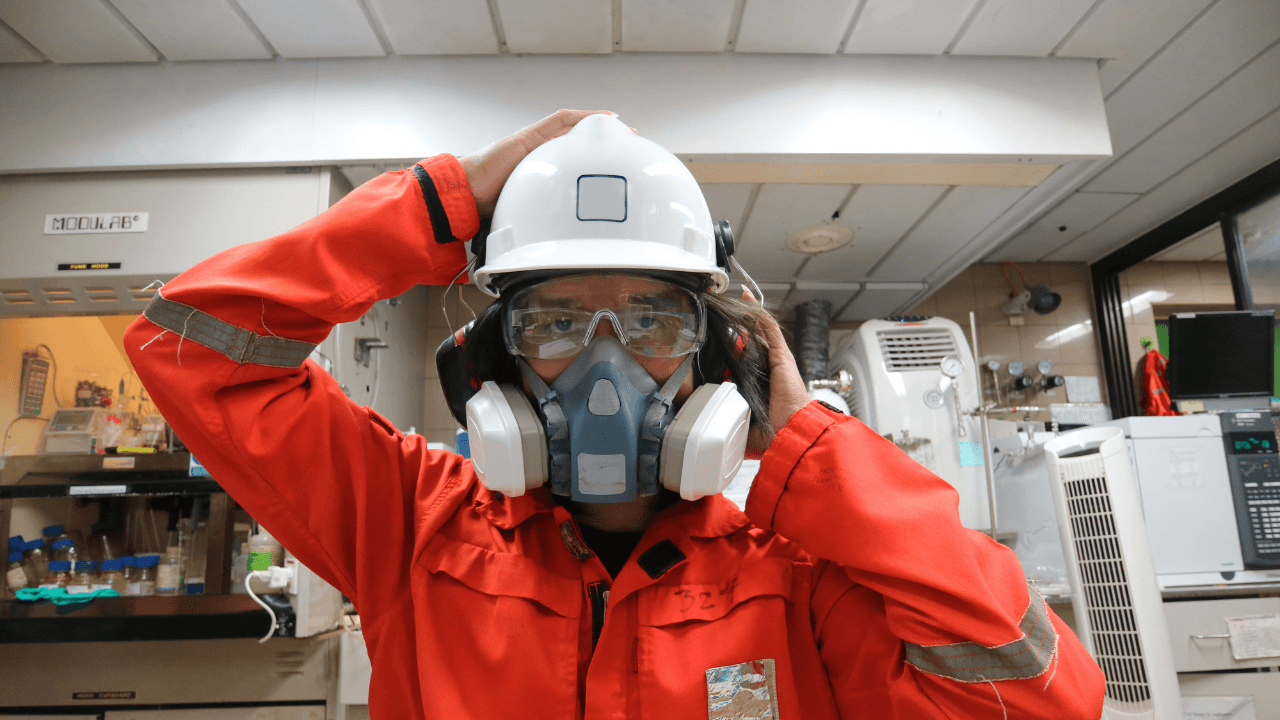
Why Respiratory Protection Matters
Respiratory hazards are invisible, odorless, and often undetectable until damage is already done. Unlike a missing machine guard or frayed electrical cord, airborne contaminants like silica dust, welding fumes, chemical vapors, and metal particulates cause chronic occupational illnesses that may not appear for years or decades.
By the time symptoms appear, shortness of breath, persistent cough, reduced lung capacity, the damage is often irreversible.
OSHA's Respiratory Protection Standard (29 CFR 1910.134) exists to prevent these life-altering diseases. And if you have employees wearing respirators for any reason, even voluntarily, you have compliance obligations.
When Is a Respiratory Protection Program Required?
Many employers mistakenly believe respiratory protection is only required in certain industries. The reality: if your employees wear respirators, you need a program.
Required Respiratory Protection (Not Optional)
You must implement a respiratory protection program if:
1. Exposure Monitoring Shows Exceedances
If air sampling reveals exposures above OSHA's Permissible Exposure Limits (PELs) or Action Levels, respirators are required.
Common scenarios:
- Silica dust exceeding 25 µg/m³ (Action Level) or 50 µg/m³ (PEL)
- Welding fumes with hexavalent chromium, manganese, or iron oxide above PELs
- Solvent vapors (MEK, toluene, xylene) exceeding PELs
- Wood dust, paint overspray, or other particulates above exposure limits
Key point: Engineering controls (ventilation, enclosure) must be used first. Respirators are only acceptable when engineering controls are infeasible or insufficient.
2. Specific OSHA Standards Mandate Respiratory Protection
Certain hazards trigger automatic respiratory protection requirements regardless of exposure levels:
- Asbestos (1910.1001 / 1926.1101): Any disturbance of asbestos-containing materials
- Lead (1910.1025): Exposures above Action Level (30 µg/m³)
- Silica (1910.1053 / 1926.1153): Tasks generating silica dust above Action Level
- Confined spaces (1910.146): When oxygen levels are below 19.5% or contaminants are present
- Spray painting: Exposure to isocyanates, solvents, or particulates
- Emergency response: Exposure to unknown or IDLH (Immediately Dangerous to Life or Health) atmospheres
3. Employees Request Respirators (Voluntary Use)
Even if respirators aren't required by exposure levels, employees have the right to wear them voluntarily. And when they do, you have compliance obligations.
Examples of voluntary use:
- Employees wearing dust masks for comfort during sweeping or cleanup
- Welders using respirators even though exposures are below PELs
- Workers wearing respirators due to respiratory sensitivity or allergies
Important distinction:
- Filtering facepiece respirators (N95, N99) worn voluntarily → Limited compliance requirements
- Elastomeric half-masks or full-face respirators worn voluntarily → Full compliance requirements including medical evaluations and fit testing
OSHA's Respiratory Protection Program Requirements
If you have required or voluntary respirator use, you must implement a written respiratory protection program addressing:
1. Written Program
The program must be facility-specific, not a generic template, and include:
- Procedures for selecting respirators based on hazards
- Medical evaluation procedures for respirator users
- Fit testing procedures and schedules
- Procedures for proper use including donning, doffing, and seal checks
- Maintenance and care including cleaning, inspection, and storage
- Cartridge change-out schedules based on exposure levels and manufacturer guidance
- Training requirements and schedules
- Program evaluation and updates
Common mistake: Downloading a generic program from the internet and putting your company name on it. OSHA will cite you for an inadequate program if it doesn't reflect your actual operations.
2. Hazard Assessment and Respirator Selection
You must identify respiratory hazards and select appropriate respirators:
Step 1: Identify All Respiratory Hazards
- Conduct air sampling to measure exposures
- Review Safety Data Sheets (SDS) for chemical hazards
- Evaluate processes that generate dusts, fumes, vapors, or mists
- Assess confined spaces for oxygen deficiency or contaminant levels
Step 2: Determine Required Protection Factor
Based on exposure levels, calculate the Assigned Protection Factor (APF) needed:
Required APF = Measured Exposure / Permissible Exposure Limit (PEL)
Example:
- Silica exposure: 150 µg/m³
- Silica PEL: 50 µg/m³
- Required APF: 150 / 50 = 3 or higher
Step 3: Select Appropriate Respirator
Match the required APF to respirator type:
| Respirator Type | APF | Use Case |
|---|---|---|
| Filtering Facepiece (N95) | 10 | Low-level particulate exposure |
| Half-Mask Elastomeric (P100) | 10 | Moderate particulate exposure |
| Half-Mask with Organic Vapor Cartridge | 10 | Moderate vapor/gas exposure |
| Full-Face Elastomeric | 50 | High exposure, eye/face protection needed |
| Powered Air-Purifying (PAPR) | 25-1000 | High exposure, comfort needed |
| Supplied-Air Respirator (SAR) | 1000 | Very high exposure, confined space |
| Self-Contained Breathing Apparatus (SCBA) | 10,000 | IDLH atmospheres, emergency response |
Important: Always ensure the respirator is NIOSH-certified for the specific hazards present.
3. Medical Evaluations
Before an employee is fit tested or required to use a respirator, they must receive a medical evaluation to determine if they can safely wear a respirator.
Medical Questionnaire (Appendix C)
Employees complete a confidential questionnaire addressing:
- Respiratory conditions (asthma, COPD, emphysema)
- Cardiovascular conditions (heart disease, high blood pressure)
- Medications that may impair ability to work while wearing a respirator
- Previous problems using respirators
The questionnaire is reviewed by a Physician or Other Licensed Health Care Professional (PLHCP) who determines:
- Approved: Employee can use respirators without restrictions
- Approved with limitations: Employee can use respirators under specific conditions
- Not approved: Employee cannot safely use a respirator
Key points:
- Medical evaluations must be conducted before fit testing
- Evaluations must be repeated annually or when conditions change
- Medical information is confidential (employer only receives "approved" or "not approved")
- Employers must pay for medical evaluations
When Medical Exams Are Required
Beyond the questionnaire, a full medical exam may be required if:
- The PLHCP deems it necessary based on questionnaire responses
- Employee reports difficulty breathing while wearing a respirator
- Supervisor or program administrator observes problems
- Employee will use a negative-pressure respirator in IDLH atmospheres
4. Fit Testing
Fit testing ensures the respirator properly seals to the employee's face, preventing unfiltered air from leaking in.
Initial Fit Testing
- Required before an employee is allowed to use a tight-fitting respirator
- Must be conducted for the specific make, model, and size the employee will use
- Must pass both qualitative or quantitative fit testing protocol
Annual Fit Testing
- Required at least annually to ensure continued proper fit
- Required whenever employee experiences significant weight change, dental work, facial scarring, or other changes that could affect fit
Types of Fit Testing
Qualitative Fit Testing (QLFT):
- Uses taste or smell to detect leakage (saccharin, Bitrex, isoamyl acetate)
- Suitable for half-mask respirators (APF ≤ 10)
- Less expensive and faster
- Subjective (relies on employee's ability to detect agent)
Quantitative Fit Testing (QNFT):
- Uses instruments to measure leakage and calculate fit factor
- Required for full-face respirators and high-APF devices
- Objective and more accurate
- More expensive and requires specialized equipment
Common mistakes:
- Conducting fit testing before medical clearance (illegal)
- Using one respirator model for fit testing, then issuing a different model
- Not repeating fit testing after significant facial changes
- Allowing facial hair that interferes with seal
5. Training
All respirator users must receive training before initial use and annually thereafter.
Required Training Topics
- Why respirators are necessary (nature of hazards)
- How respirators work and their limitations
- How to inspect, don, doff, and adjust respirators
- How to perform seal checks before each use
- How to recognize and respond to respirator malfunctions
- Maintenance and storage requirements
- Medical signs and symptoms that may limit respirator use
- General requirements of the respiratory protection standard
Hands-On Demonstration
Training must include hands-on practice demonstrating:
- Proper donning and doffing
- Seal check techniques (positive and negative pressure checks)
- Adjustment for proper fit
- Recognition of improper fit
Documentation requirements:
- Employee name and date of training
- Topics covered and trainer name
- Employee signature acknowledging understanding
6. Maintenance and Care
Respirators must be properly maintained to ensure effectiveness:
Cleaning and Disinfecting
- After each use for respirators used by multiple employees
- As needed for respirators assigned to individual employees
- Use manufacturer-recommended cleaning solutions
- Avoid harsh chemicals that may degrade materials
Inspection
Before and after each use, inspect for:
- Cracks, tears, or holes in facepiece
- Damaged or missing headbands or straps
- Cracked or scratched lenses (full-face respirators)
- Damaged or missing valves
- Cartridge/filter condition and proper installation
Replace immediately if any defects are found.
Storage
- Store in clean, dry location away from contaminants
- Protect from sunlight, heat, extreme cold, and moisture
- Store in sealed bags or containers to prevent contamination
- Emergency respirators must be stored in quickly accessible locations
Cartridge/Filter Change-Out
Develop a cartridge change-out schedule based on:
- Manufacturer recommendations
- Exposure levels and duration of use
- Employee reports of difficulty breathing or breakthrough (odor, taste)
- Presence of end-of-service-life indicators (ESLI)
Common mistake: Waiting until employees smell or taste contaminants. For many chemicals, odor thresholds are above safe exposure limits, meaning damage is already occurring.
7. Program Evaluation
Conduct regular program evaluations to ensure effectiveness:
- Annual reviews of program procedures and compliance
- Employee consultations to identify problems or concerns
- Workplace inspections to verify proper respirator use
- Exposure monitoring to confirm controls remain effective
Update the written program whenever:
- New hazards are identified
- New respirator types are used
- Workplace conditions change
- Deficiencies are identified
Common Respiratory Protection Violations
1. No Written Program
The violation: Employees wear respirators but no formal written program exists.
OSHA citation: Serious violation, $7,000-$15,979 per instance
The fix: Develop a facility-specific written program addressing all required elements.
2. No Medical Evaluations
The violation: Employees use respirators without medical clearance.
OSHA citation: Serious violation, $7,000-$15,979 per instance
The fix: Require medical evaluations before fit testing or respirator use. Repeat annually.
3. No Fit Testing
The violation: Employees use tight-fitting respirators without fit testing.
OSHA citation: Serious violation, $7,000-$15,979 per instance
The fix: Conduct fit testing for all tight-fitting respirators annually and after any facial changes.
4. Facial Hair Interfering with Seal
The violation: Employees with beards or mustaches use tight-fitting respirators where facial hair comes between sealing surface and face.
OSHA citation: Serious violation, $7,000-$15,979 per instance
The fix: Enforce clean-shaven policy for respirator users or provide alternative respirators (PAPR, supplied-air) that don't require tight seal.
5. Wrong Respirator for the Hazard
The violation: Using respirators not rated for the hazard (e.g., N95 for vapor exposure, dust mask for asbestos).
OSHA citation: Serious violation, $7,000-$15,979 per instance
The fix: Conduct hazard assessment and select NIOSH-certified respirators appropriate for identified hazards.
6. No Cartridge Change-Out Schedule
The violation: Employees use cartridges beyond service life.
OSHA citation: Serious violation, $7,000-$15,979 per instance
The fix: Develop change-out schedules based on exposure levels and manufacturer guidance. Document changes.
7. Inadequate Training
The violation: No documentation of training or training that doesn't cover required topics.
OSHA citation: Serious violation, $7,000-$15,979 per instance
The fix: Provide comprehensive training before initial use and annually. Document all elements.
Voluntary Use: Limited vs. Full Requirements
Many employers are confused about voluntary use requirements. Here's the breakdown:
Filtering Facepiece Respirators (N95, N99, N100)
If employees voluntarily use filtering facepiece respirators when not required:
Limited requirements:
- ✅ Provide Appendix D information sheet
- ✅ Ensure respirators don't create a hazard
- ❌ No medical evaluation required
- ❌ No fit testing required
- ❌ No written program required (unless required elsewhere)
Elastomeric Respirators (Half-Mask, Full-Face)
If employees voluntarily use elastomeric respirators when not required:
Full requirements apply:
- ✅ Written respiratory protection program
- ✅ Medical evaluations
- ✅ Fit testing
- ✅ Training
- ✅ Maintenance and care
Why the difference? Filtering facepieces are disposable and low-risk. Elastomeric respirators are reusable and can create health risks if improperly used.
Provisio EHS Consulting: Respiratory Protection Program Services
Implementing a compliant respiratory protection program requires expertise in industrial hygiene, OSHA regulations, and workplace assessment. Our certified industrial hygienists (CIH) provide comprehensive respiratory protection services:
Program Development
We create facility-specific written programs tailored to your operations:
- Hazard assessment and respirator selection
- Procedures for medical evaluations and fit testing
- Training requirements and schedules
- Maintenance and cartridge change-out schedules
- Program evaluation procedures
Fit Testing Services
Our certified fit testers conduct on-site fit testing for your employees:
- Qualitative fit testing (QLFT) for half-mask respirators
- Quantitative fit testing (QNFT) for full-face and high-APF respirators
- Annual fit testing and re-testing after facial changes
- Documentation and recordkeeping
Medical Surveillance Coordination
We coordinate medical evaluations with occupational health providers:
- OSHA-compliant medical questionnaires (Appendix C)
- Physician review and clearance determination
- Annual re-evaluations and updates
- Confidential medical record management
Training
We provide hands-on respirator training covering:
- Hazard recognition and respirator limitations
- Proper donning, doffing, and seal checks
- Maintenance and storage
- Emergency procedures
- Documentation and certification
Air Sampling and Exposure Assessment
We conduct exposure monitoring to determine if respiratory protection is required:
- Personal air sampling for silica, welding fumes, VOCs, dusts
- Area sampling to identify emission sources
- Comparison to OSHA PELs and Action Levels
- Recommendations for engineering controls and respiratory protection
Request respiratory protection program services →
Bundle Option: Consulting + Software
Combine respiratory protection program development with Provisio Core to:
- Track fit testing schedules and send reminders before expirations
- Manage training records for all respirator users
- Document cartridge change-outs and maintenance
- Maintain medical clearance records (confidential)
- Generate compliance reports for OSHA inspections
Learn more about our consulting + software bundles →
Conclusion: Respiratory Protection Saves Lives
Respiratory protection isn't just an OSHA checkbox, it's the difference between employees who retire healthy and those who develop chronic lung disease in their 50s.
Key Takeaways
✅ Respiratory protection programs are required whenever respirators are used (even voluntarily) ✅ Engineering controls must be used first; respirators are the last line of defense ✅ Medical evaluations and fit testing are required before respirator use ✅ Annual fit testing and training are mandatory ✅ Facial hair interfering with seal is a serious OSHA violation ✅ Use certified industrial hygienists to develop programs and conduct fit testing
Don't wait for OSHA to find respiratory protection violations. Implement a compliant program today and protect your employees from invisible hazards.
Next Steps
- Schedule a respiratory protection program assessment
- Request fit testing services for your facility
- Learn about our industrial hygiene consulting services
- Explore our safety management software
About Provisio EHS: Our certified industrial hygienists (CIH) have extensive experience developing respiratory protection programs for manufacturers, construction firms, and industrial operations. We provide program development, fit testing, training, and exposure monitoring to ensure your employees are protected from respiratory hazards.
Ready to Improve Your Safety Management?
Explore Provisio EHS solutions to streamline compliance and protect your workforce.
Schedule Your OSHA Audit
Let our industrial hygiene professionals identify your compliance gaps before regulators do.
Try Provisio EHS Free
Get 30 days of full access to our safety management platform. No credit card required.
Start Your Free TrialSee How It Works Together
Explore our Audit + Software Implementation Bundle. Get compliant and automate faster.
Get Bundle Pricing